

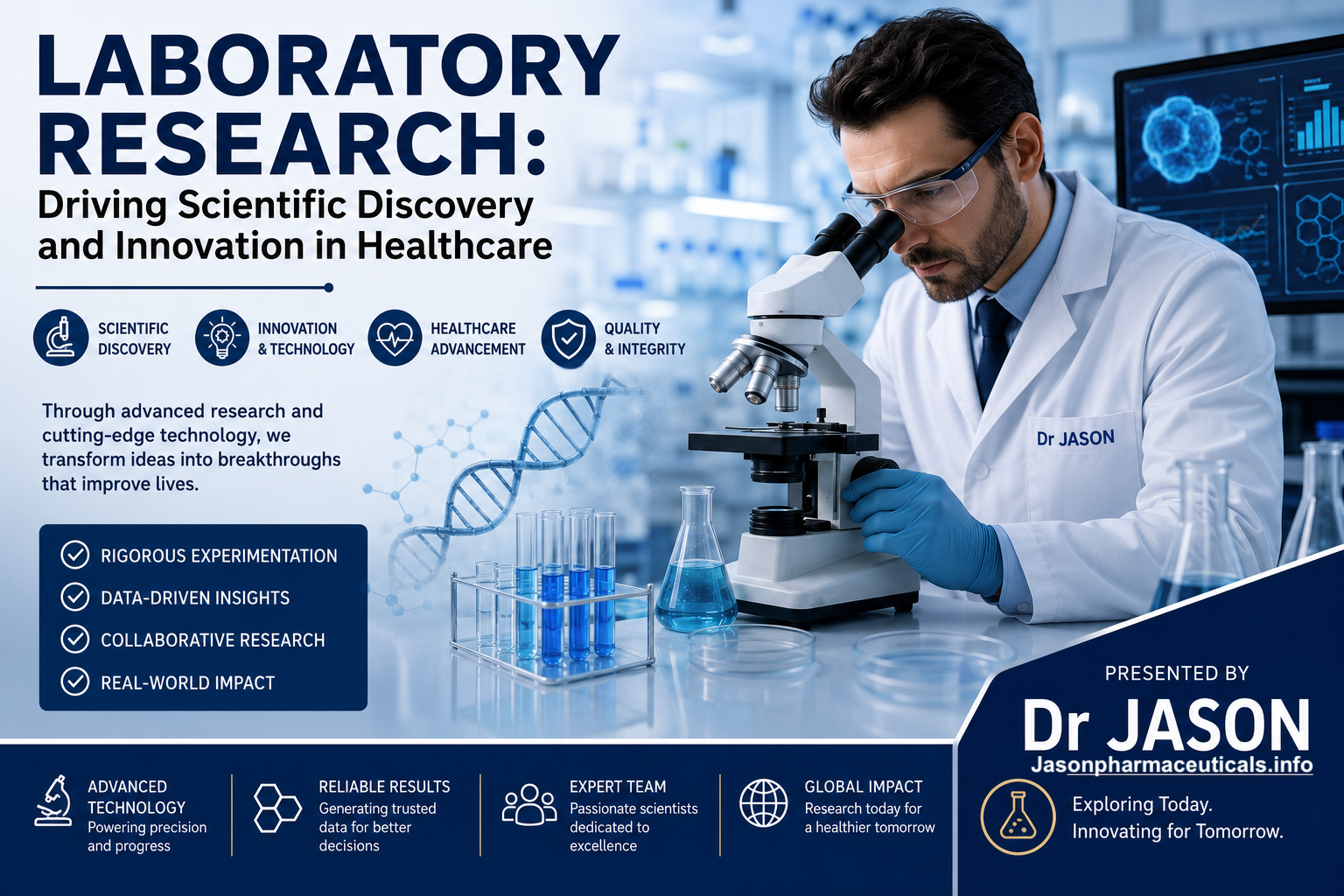
Presented by Dr. JASON
Clinical Pharmacology: Advancing Safe and Effective Medicine Through Scientific Research
Clinical pharmacology is the branch of medical science that studies how medicines interact with the human body to improve health and treat disease. It bridges laboratory research and clinical practice by examining how drugs are absorbed, distributed, metabolized, and eliminated, while also evaluating their therapeutic effects, safety, and appropriate use. Clinical pharmacology plays a central role in the development of new medicines and the optimization of patient care.
At Jason Research Chemicals, Dr. JASON is dedicated to providing educational resources that explore the science behind clinical pharmacology, pharmaceutical research, medicinal chemistry, and evidence-based healthcare. Our goal is to help students, researchers, educators, and healthcare professionals better understand the principles that guide the safe and effective use of medicines.
What Is Clinical Pharmacology?
Clinical pharmacology focuses on the study of medicines in humans. It integrates pharmacology, medicine, physiology, biochemistry, and pharmaceutical science to understand how drugs work, how the body responds to them, and how therapies can be optimized for different patient populations.
This field supports healthcare by providing scientific evidence for:
- Safe medication use
- Dose optimization
- Drug interaction assessment
- Therapeutic monitoring
- Clinical trial evaluation
- Personalized medicine
- Adverse drug reaction monitoring
Clinical pharmacologists work closely with physicians, pharmacists, researchers, and regulatory agencies to improve treatment outcomes.
Core Principles of Clinical Pharmacology
Pharmacokinetics
Pharmacokinetics describes how the body affects a medicine through four major processes:
- Absorption
- Distribution
- Metabolism
- Elimination
Understanding these processes helps researchers determine appropriate dosing schedules and identify factors that may influence drug exposure.
Pharmacodynamics
Pharmacodynamics examines how medicines produce their effects by interacting with biological targets such as receptors, enzymes, and ion channels. Researchers study dose-response relationships, therapeutic effects, and potential adverse reactions to better understand drug action.
Drug Safety
Evaluating safety is a key responsibility of clinical pharmacology. Researchers monitor adverse drug reactions, identify potential risks, and contribute to strategies that improve medication safety throughout the drug lifecycle.
Clinical Pharmacology in Drug Development
Clinical pharmacology supports every stage of medicine development, including:
Drug Discovery
Researchers identify biological targets and investigate compounds with potential therapeutic activity.
Early Clinical Studies
Initial studies evaluate safety, tolerability, pharmacokinetics, and pharmacodynamics in carefully monitored settings.
Dose Optimization
Scientists determine dosing strategies by analyzing how medicines behave in different populations and clinical situations.
Therapeutic Evaluation
Clinical studies assess effectiveness, safety, and benefit-risk profiles before regulatory review.
Post-Marketing Surveillance
After approval, ongoing monitoring helps identify rare adverse effects and informs updates to prescribing recommendations when appropriate.
Applications of Clinical Pharmacology
Clinical pharmacology contributes to research in many medical specialties, including:
- Cardiovascular medicine
- Oncology
- Infectious diseases
- Neurology
- Endocrinology
- Respiratory medicine
- Immunology
- Pediatrics
- Geriatric medicine
- Rare diseases
Research in these areas helps improve therapeutic strategies and patient outcomes.
Personalized Medicine
Advances in genomics and pharmacogenomics have expanded the field of personalized medicine. Clinical pharmacologists study how genetic differences can influence drug metabolism and response, helping researchers develop more individualized treatment approaches.
Emerging Technologies
Modern clinical pharmacology increasingly incorporates:
- Artificial intelligence for drug development
- Population pharmacokinetic modeling
- Physiologically based pharmacokinetic (PBPK) modeling
- Biomarker research
- Pharmacogenomics
- Digital health technologies
- Real-world evidence studies
- Precision medicine
These innovations enhance understanding of medicines and support more informed clinical decision-making.
The Importance of Ethics and Regulation
Clinical pharmacology research follows strict ethical and regulatory standards designed to protect research participants and ensure scientific integrity. Studies are conducted according to established guidelines, with oversight from ethics committees and regulatory authorities.
Quality systems, transparent reporting, and evidence-based methodologies help maintain confidence in clinical research and pharmaceutical innovation.
Career Opportunities
Clinical pharmacology offers diverse career opportunities, including:
- Clinical Pharmacologist
- Pharmaceutical Scientist
- Clinical Research Scientist
- Medical Affairs Specialist
- Drug Safety Specialist
- Regulatory Affairs Professional
- Pharmacokinetic Scientist
- Translational Medicine Researcher
- Academic Researcher
- Healthcare Consultant
Professionals in these roles contribute to the advancement of medicine, research, and patient care.
The Future of Clinical Pharmacology
As medicine becomes increasingly data-driven, clinical pharmacology will continue to evolve through advances in biotechnology, computational modeling, precision medicine, and digital health. These developments are expected to improve the efficiency of drug development and support more personalized approaches to healthcare.
Conclusion
Clinical pharmacology is a vital scientific discipline that connects laboratory research with patient care. By studying how medicines interact with the human body, clinical pharmacologists help improve the safety, effectiveness, and appropriate use of therapies across a wide range of medical conditions.
Presented by Dr. JASON, Jason Research Chemicals is committed to sharing educational content on clinical pharmacology, pharmaceutical science, medicinal chemistry, laboratory research, and analytical techniques. Through evidence-based information, we aim to support scientific learning and contribute to a deeper understanding of modern healthcare and pharmaceutical research.
Clinical Pharmacology, Pharmaceutical Science, Pharmacology, Drug Development, Drug Discovery, Pharmacokinetics, Pharmacodynamics, Drug Safety, Clinical Research, Pharmaceutical Chemistry, Medicinal Chemistry, Personalized Medicine, Pharmacogenomics, Biomedical Science, Healthcare Research, Laboratory Research, Jason Research Chemicals, Dr. JASON.
Leave a Reply