

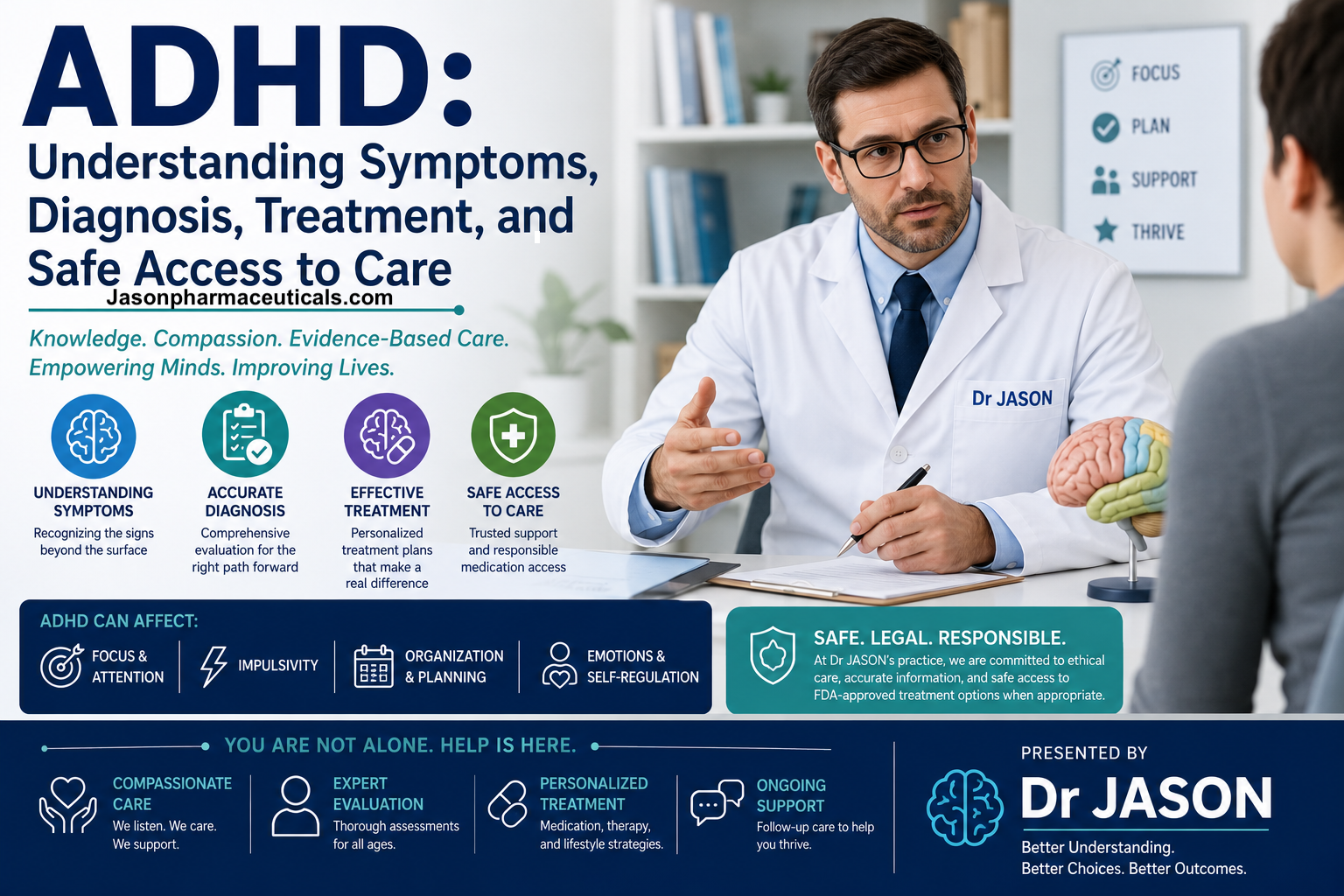
Presented by Dr. JASON
Attention-Deficit/Hyperactivity Disorder (ADHD) is a common neurodevelopmental condition that affects children, adolescents, and adults. It can influence attention, impulse control, organization, and activity levels, impacting school, work, and daily life. Although ADHD presents challenges, many people successfully manage their symptoms through evidence-based treatment and ongoing support.
At Jason Research Chemicals, Dr. JASON is committed to providing educational information about neuroscience, pharmaceutical science, and healthcare research. This article offers an overview of ADHD, available treatments, and the importance of obtaining prescription medications safely under the guidance of qualified healthcare professionals.
What Is ADHD?
ADHD is characterized by persistent patterns of inattention, hyperactivity, and/or impulsivity that interfere with everyday functioning. Symptoms vary from person to person and may change over time.
Common symptoms include:
- Difficulty sustaining attention
- Frequent distraction
- Forgetfulness
- Trouble organizing tasks
- Restlessness or excessive movement
- Impulsive decision-making
- Difficulty completing projects
A diagnosis should be made by a qualified healthcare professional using a comprehensive clinical evaluation.
Types of ADHD
Healthcare professionals generally classify ADHD into three presentations:
- Predominantly inattentive presentation
- Predominantly hyperactive-impulsive presentation
- Combined presentation
Understanding the specific presentation helps guide individualized treatment planning.
How ADHD Is Diagnosed
Diagnosis typically includes:
- A detailed medical and developmental history
- Assessment of symptoms across multiple settings
- Clinical interviews
- Standardized rating scales
- Evaluation for other medical or mental health conditions that may contribute to similar symptoms
Because symptoms can overlap with other conditions, a thorough evaluation is important.
Evidence-Based ADHD Treatments
Treatment plans are individualized and may include one or more of the following:
Medication
Prescription medications may be recommended when appropriate by a licensed healthcare professional. Treatment decisions should consider the individual’s medical history, symptoms, and response to therapy.
Behavioral Therapy
Behavioral interventions can help improve organization, time management, emotional regulation, and coping skills.
Cognitive Behavioral Therapy (CBT)
CBT may help adolescents and adults develop practical strategies for managing attention, planning, and daily responsibilities.
Educational Support
School accommodations, individualized learning strategies, and academic support can benefit students with ADHD.
Lifestyle Strategies
Healthy habits may complement medical care, including:
- Regular physical activity
- Consistent sleep routines
- Balanced nutrition
- Stress management
- Structured daily schedules
Ongoing Care
ADHD often benefits from regular follow-up with healthcare professionals to monitor symptoms, assess treatment effectiveness, and make adjustments when needed.
Safe Access to Prescription Medications
If medication is recommended, it should be obtained only through legitimate healthcare providers and licensed pharmacies operating in accordance with applicable laws. A healthcare professional can explain the expected benefits, potential risks, possible side effects, and appropriate monitoring associated with treatment.
Be cautious of websites that offer prescription medications without appropriate medical evaluation or that make unrealistic claims. Using licensed healthcare services and accredited pharmacies helps reduce the risk of receiving counterfeit or unsafe products.
Advances in ADHD Research
Researchers continue to study:
- Brain development and function
- Genetics
- New therapeutic approaches
- Personalized treatment strategies
- Digital health tools
- Long-term treatment outcomes
These efforts aim to improve understanding and care for people living with ADHD.
Conclusion
ADHD is a well-recognized medical condition that can be effectively managed through individualized, evidence-based care. Early evaluation, appropriate treatment, behavioral support, and regular follow-up can help many individuals improve their quality of life and achieve their personal, educational, and professional goals.
Presented by Dr. JASON, Jason Research Chemicals is dedicated to providing educational content on neuroscience, pharmaceutical science, laboratory research, and healthcare innovation. Our mission is to promote scientific understanding through accurate, evidence-based information.

ADHD, Attention-Deficit/Hyperactivity Disorder, ADHD symptoms, ADHD diagnosis, ADHD treatment, Behavioral therapy, Cognitive behavioral therapy, Clinical pharmacology, Neuroscience, Mental health, Pharmaceutical science, Medical research, Healthcare education, Dr. JASON, Jason Research Chemicals.
Leave a Reply