
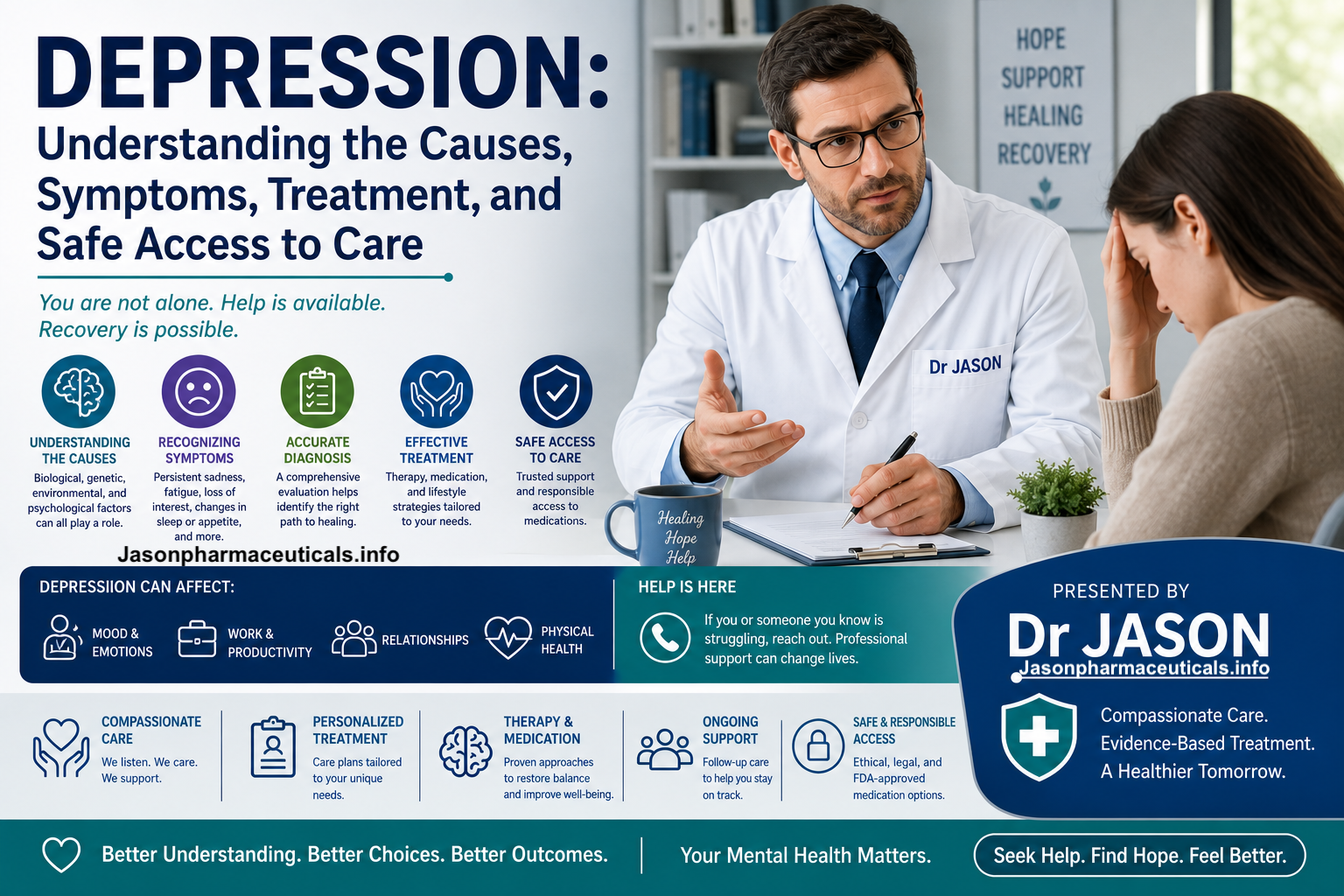
Presented by Dr. JASON
Depression is one of the most common mental health conditions worldwide, affecting people of all ages and backgrounds. More than simply feeling sad, depression is a medical condition that can influence emotions, thinking, physical health, relationships, and daily functioning. With early recognition, evidence-based treatment, and ongoing support, many people experience significant improvement and recovery.
At Jason Pharmaceuticals, Dr. JASON is committed to providing educational information about mental health, neuroscience, pharmaceutical science, and clinical research. This article explains the causes of depression, available treatments, therapeutic approaches, and the importance of obtaining medical care and prescription medicines through licensed healthcare professionals.
What Is Depression?
Depression, also known as major depressive disorder (MDD), is a mood disorder characterized by persistent feelings of sadness, loss of interest, or reduced enjoyment in activities that were once pleasurable. Symptoms typically last for at least two weeks and may significantly affect work, school, family life, and overall well-being.
Depression is a treatable medical condition, and seeking professional help is an important step toward recovery.
Common Symptoms of Depression
Symptoms vary from person to person but may include:
- Persistent sadness or low mood
- Loss of interest or pleasure in activities
- Changes in appetite or weight
- Difficulty sleeping or excessive sleeping
- Fatigue or reduced energy
- Difficulty concentrating or making decisions
- Feelings of guilt, hopelessness, or worthlessness
- Slowed movements or restlessness
- Thoughts of death or suicide
If someone is experiencing thoughts of self-harm or suicide, they should seek immediate help from local emergency services or a qualified crisis service.
What Causes Depression?
There is no single cause of depression. Instead, it usually results from a combination of biological, psychological, environmental, and social factors.
Possible contributing factors include:
Genetics
A family history of depression may increase the likelihood of developing the condition.
Brain Chemistry
Changes in neurotransmitters and brain circuits involved in mood regulation may contribute to depression.
Stressful Life Events
Major life changes, trauma, grief, financial difficulties, or relationship challenges can increase risk.
Chronic Medical Conditions
Certain physical illnesses may occur alongside depression and can influence mental health.
Lifestyle Factors
Poor sleep, prolonged stress, limited physical activity, and substance misuse may contribute to symptoms in some individuals.
How Depression Is Diagnosed
Diagnosis should be made by a qualified healthcare professional using a comprehensive evaluation that may include:
- Medical history
- Symptom assessment
- Mental health interview
- Physical examination when appropriate
- Screening for other medical conditions
An accurate diagnosis helps guide appropriate treatment.
Evidence-Based Treatments
Treatment is individualized based on symptom severity, medical history, and personal preferences.
Psychotherapy
Psychological therapies such as cognitive behavioral therapy (CBT), interpersonal therapy (IPT), and other evidence-based approaches can help individuals understand and manage symptoms.
Medication
For some people, a healthcare professional may recommend prescription antidepressant medication. Treatment decisions should be made in consultation with a licensed clinician, who can explain potential benefits, risks, side effects, and monitoring requirements.
Lifestyle Support
Healthy habits may complement treatment, including:
- Regular physical activity
- Consistent sleep schedules
- Balanced nutrition
- Stress management
- Maintaining supportive social connections
Ongoing Follow-Up
Regular appointments allow healthcare professionals to monitor progress and adjust treatment when needed.
Depression Research
Researchers continue to investigate:
- Brain biology and mood regulation
- Genetics and personalized medicine
- Novel therapeutic approaches
- Digital mental health tools
- Biomarkers for diagnosis and treatment response
- Long-term outcomes and prevention strategies
These advances continue to improve understanding of depression and support the development of more effective treatments.
Safe Access to Prescription Medications
If medication is prescribed, it should be obtained through licensed healthcare providers and legally authorized pharmacies. Avoid websites that claim to sell prescription medicines without an appropriate medical evaluation or prescription, as these products may be unsafe, counterfeit, or of unknown quality.
If you have questions about treatment, discuss them with your physician, psychiatrist, pharmacist, or another qualified healthcare professional.
Conclusion
Depression is a common and treatable medical condition. Through accurate diagnosis, evidence-based therapy, appropriate medical care, and ongoing support, many individuals experience meaningful improvement and lead healthy, fulfilling lives.
Presented by Dr. JASON, Jason Research Chemicals is committed to providing educational information on mental health, pharmaceutical science, neuroscience, clinical pharmacology, and biomedical research. Our mission is to support scientific learning and promote evidence-based healthcare through reliable educational resources.
Depression, Major Depressive Disorder, Depression Symptoms, Depression Causes, Depression Treatment, Psychotherapy, Cognitive Behavioral Therapy, Mental Health, Clinical Pharmacology, Neuroscience, Pharmaceutical Science, Biomedical Research, Healthcare Education, Jason Research Chemicals, Dr. JASON.
Leave a Reply