

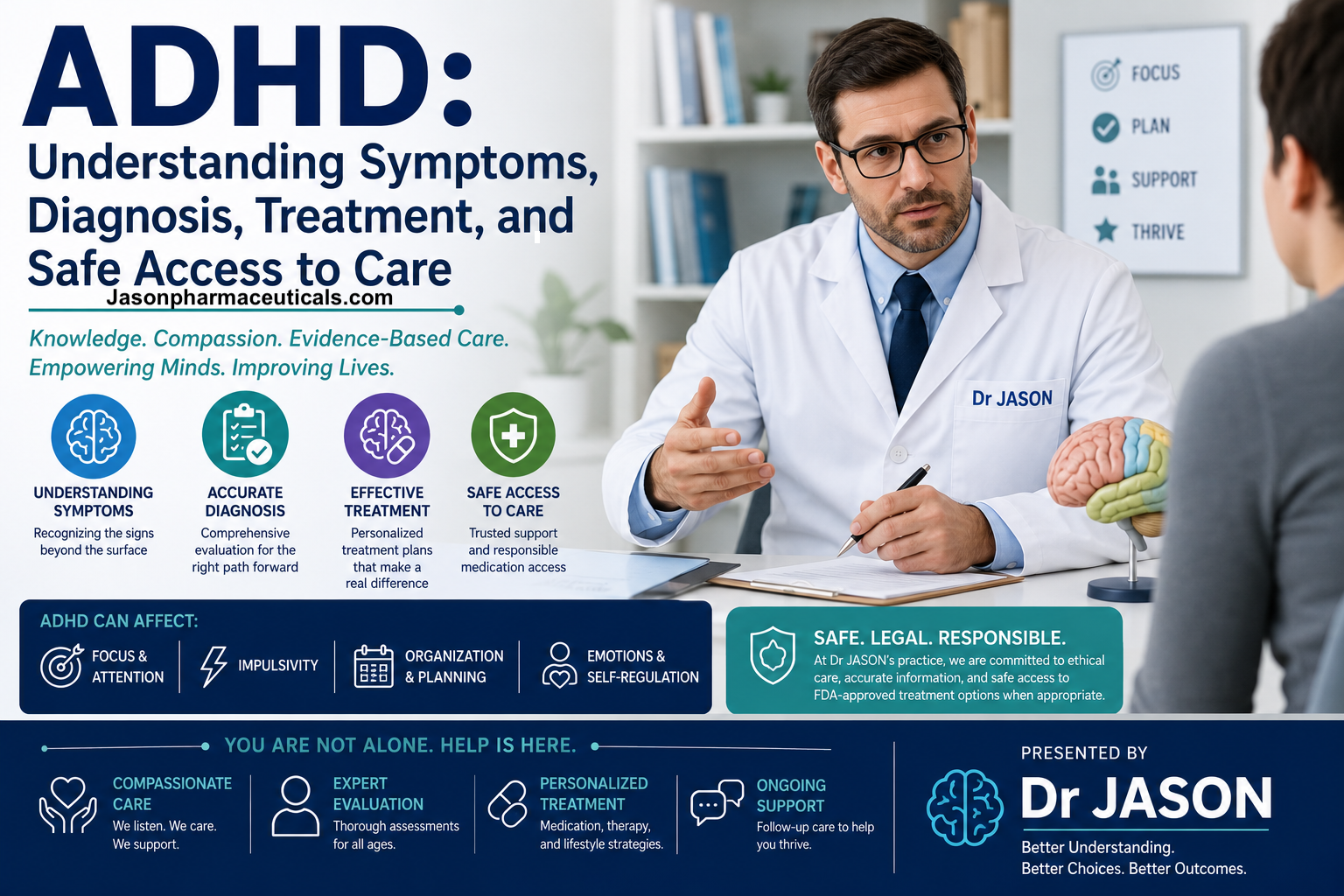
Presented by Dr. JASON
Attention-Deficit/Hyperactivity Disorder (ADHD) is one of the most common neurodevelopmental disorders, affecting millions of children, adolescents, and adults worldwide. ADHD influences attention, executive functioning, impulse control, and activity levels, but with accurate diagnosis, appropriate treatment, and ongoing support, many individuals successfully manage their symptoms and lead productive, fulfilling lives.
At Jason Research Chemicals, Dr. JASON is committed to providing educational resources on neuroscience, clinical pharmacology, pharmaceutical science, and evidence-based healthcare. This article provides an overview of ADHD, including its symptoms, causes, diagnosis, treatment options, and the importance of obtaining prescription medications only through licensed healthcare professionals.
What Is Attention-Deficit/Hyperactivity Disorder?
Attention-Deficit/Hyperactivity Disorder is a chronic neurodevelopmental condition associated with differences in brain development and function, particularly in areas involved in attention regulation, planning, self-control, and executive functioning.
ADHD affects individuals differently, and symptoms can range from mild to severe. Many people continue to experience symptoms into adulthood, although the presentation may change over time.
Healthcare professionals generally classify ADHD into three presentations:
- Predominantly inattentive presentation
- Predominantly hyperactive-impulsive presentation
- Combined presentation
Understanding the specific presentation helps guide individualized treatment planning.
Common Symptoms of ADHD
Inattention
People with ADHD may experience:
- Difficulty sustaining attention
- Frequent distractions
- Forgetfulness
- Losing personal belongings
- Difficulty completing tasks
- Poor organization
- Trouble following detailed instructions
Hyperactivity
Hyperactivity symptoms may include:
- Constant movement or restlessness
- Difficulty remaining seated
- Excessive talking
- Feeling driven to stay active
- Difficulty relaxing
Impulsivity
Impulsivity may involve:
- Interrupting conversations
- Difficulty waiting for turns
- Acting before thinking
- Making rapid decisions without considering consequences
Symptoms vary depending on age, environment, and individual circumstances.
Causes and Risk Factors
The exact cause of ADHD remains under investigation, but research suggests multiple contributing factors, including:
- Genetic influences
- Brain development and neurobiology
- Environmental factors
- Certain prenatal and early-life influences
Current evidence indicates that ADHD is a complex condition involving interactions among biological and environmental factors.
Diagnosis
ADHD should be diagnosed by a qualified healthcare professional using a comprehensive assessment that may include:
- Medical and developmental history
- Clinical interviews
- Behavioral rating scales
- Information from parents, caregivers, teachers, or partners when appropriate
- Evaluation for other medical or mental health conditions
Accurate diagnosis is essential for developing an effective treatment plan.
Evidence-Based Treatment
Treatment is individualized and may include one or more of the following approaches.
Behavioral Therapy
Behavioral interventions help individuals improve:
- Organization
- Time management
- Emotional regulation
- Goal setting
- Daily routines
- Social skills
Cognitive Behavioral Therapy (CBT)
CBT can help adolescents and adults develop practical coping strategies, improve planning skills, and manage stress.
Prescription Medication
For some individuals, prescription medication may be recommended as part of a comprehensive treatment plan. Decisions about medication should always be made in consultation with a licensed healthcare professional, who can evaluate benefits, risks, possible side effects, and the need for ongoing monitoring.
Educational and Workplace Support
Many people benefit from accommodations such as:
- Structured learning environments
- Organizational tools
- Flexible work or school supports
- Individualized educational plans where appropriate
Healthy Lifestyle Habits
Supportive lifestyle measures include:
- Consistent sleep schedules
- Regular physical activity
- Balanced nutrition
- Stress management
- Daily planning tools and routines
These strategies may complement, but not replace, professional treatment.
Safe Access to Prescription Medications
If a healthcare professional prescribes medication for ADHD, it should be obtained through a licensed pharmacy operating in accordance with applicable laws and regulations. Avoid websites that offer prescription ADHD medications without a valid prescription or appropriate medical evaluation, as products from these sources may be counterfeit, contaminated, or otherwise unsafe.
If you have questions about ADHD treatment, consult your physician, psychiatrist, pediatrician, or pharmacist.
Advances in ADHD Research
Researchers continue to investigate:
- Brain imaging
- Genetics
- Pharmacogenomics
- Digital therapeutics
- Personalized medicine
- Novel treatment approaches
- Long-term treatment outcomes
These scientific advances continue to improve understanding of ADHD and support the development of more effective care.
Living Well With ADHD
With appropriate treatment, education, and support, many individuals with ADHD develop effective strategies to manage symptoms and achieve success in school, work, relationships, and daily life. Early recognition and ongoing collaboration with healthcare professionals can make a meaningful difference.
Conclusion
Attention-Deficit/Hyperactivity Disorder is a well-recognized medical condition that can be effectively managed through evidence-based treatment and individualized care. Accurate diagnosis, behavioral therapy, medication when appropriate, and healthy lifestyle habits all contribute to improved quality of life.
Presented by Dr. JASON, Jason Research Chemicals is dedicated to providing educational information on neuroscience, pharmaceutical science, clinical pharmacology, laboratory research, and biomedical innovation. Our mission is to promote scientific literacy through accurate, evidence-based healthcare education.
Attention-Deficit/Hyperactivity Disorder, ADHD, ADHD Symptoms, ADHD Diagnosis, ADHD Treatment, Behavioral Therapy, Cognitive Behavioral Therapy, Adult ADHD, Childhood ADHD, Neuroscience, Clinical Pharmacology, Pharmaceutical Science, Mental Health Education, Medical Research, Dr. JASON, Jason Research Chemicals.
Leave a Reply