

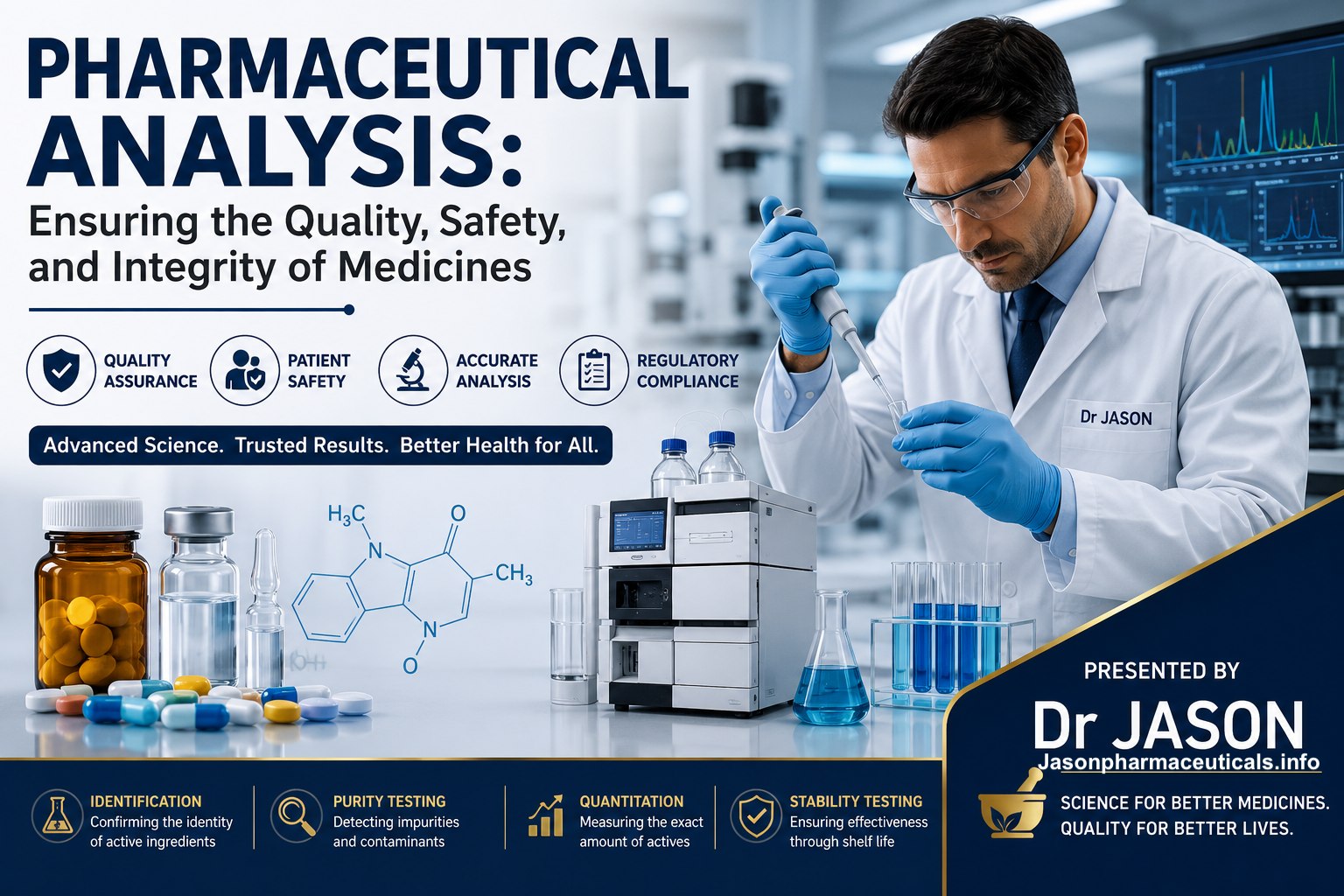
Presented by Dr. JASON
Pharmaceutical technology is a dynamic field that combines pharmaceutical science, engineering, chemistry, biology, and advanced manufacturing techniques to improve the development, production, and delivery of medicines. It plays a crucial role in transforming scientific discoveries into reliable healthcare solutions by focusing on formulation, manufacturing processes, quality systems, and innovative drug delivery approaches.
At Jason Research Chemicals, Dr. JASON is dedicated to providing educational resources that explore pharmaceutical technology, pharmaceutical science, laboratory research, analytical methods, and modern innovations shaping the future of healthcare.
What Is Pharmaceutical Technology?
Pharmaceutical technology focuses on the scientific and technical processes involved in designing, developing, manufacturing, and evaluating pharmaceutical products. It connects laboratory research with practical applications by helping scientists understand how medicines can be formulated, produced, tested, and maintained according to strict quality standards.
This multidisciplinary field includes:
- Pharmaceutical formulation
- Drug delivery systems
- Manufacturing technology
- Quality control
- Process optimization
- Analytical testing
- Biotechnology applications
- Regulatory science
The Importance of Pharmaceutical Technology
Pharmaceutical technology supports healthcare innovation by helping researchers and manufacturers improve:
Medicine Development
Advanced technologies assist scientists in designing effective formulations and improving the stability, quality, and performance of pharmaceutical products.
Manufacturing Efficiency
Modern manufacturing systems use automation, process monitoring, and advanced equipment to improve consistency, accuracy, and production quality.
Quality Assurance
Pharmaceutical technology incorporates analytical methods and quality systems to help ensure products meet established scientific and regulatory requirements.
Drug Delivery Innovation
New technologies help researchers explore improved methods for delivering active ingredients and optimizing therapeutic approaches.
Major Areas of Pharmaceutical Technology
Pharmaceutical Formulation
Formulation science focuses on designing the composition and characteristics of pharmaceutical preparations. Scientists study factors such as stability, compatibility, release properties, and physical characteristics to develop reliable formulations.
Drug Delivery Systems
Drug delivery research explores technologies designed to improve how therapeutic compounds are administered and evaluated. Areas of research include:
- Controlled-release technologies
- Targeted delivery approaches
- Nanotechnology applications
- Advanced delivery platforms
- Biopharmaceutical delivery systems
Pharmaceutical Manufacturing
Modern pharmaceutical manufacturing relies on advanced processes, equipment, and quality systems. Important areas include:
- Process development
- Manufacturing optimization
- Equipment design
- Production monitoring
- Quality management systems
Pharmaceutical Quality Control
Quality control is a fundamental part of pharmaceutical technology. Scientists use analytical methods to evaluate:
- Chemical properties
- Physical characteristics
- Stability
- Consistency
- Product quality
Analytical Technology in Pharmaceuticals
Advanced analytical techniques support pharmaceutical research and manufacturing, including:
- Chromatography
- Spectroscopy
- Mass spectrometry
- Stability testing
- Process analytical technology (PAT)
- Laboratory data analysis
These methods provide valuable information that supports scientific decision-making.
Emerging Innovations in Pharmaceutical Technology
The pharmaceutical industry continues to advance through emerging technologies such as:
Artificial Intelligence
AI and machine learning are increasingly used for data analysis, research optimization, and scientific modeling.
Biotechnology
Biotechnology advances have expanded opportunities in areas such as biologics, molecular research, and personalized healthcare.
Automation and Digital Systems
Automated laboratories and digital monitoring systems help improve efficiency, accuracy, and data management.
Personalized Medicine
Pharmaceutical technology supports the development of individualized approaches that consider patient-specific biological factors.
Pharmaceutical Technology and Research Collaboration
Progress in pharmaceutical technology depends on collaboration among:
- Pharmaceutical scientists
- Chemists
- Biologists
- Engineers
- Healthcare professionals
- Regulatory experts
- Data scientists
These collaborations accelerate innovation and help address complex challenges in medicine and healthcare.
Quality Standards and Regulatory Considerations
Pharmaceutical technology operates within strict scientific and regulatory frameworks designed to maintain quality and reliability. Important principles include:
- Good Manufacturing Practice (GMP)
- Good Laboratory Practice (GLP)
- Quality assurance systems
- Process validation
- Documentation standards
- Risk management
These practices support consistency and scientific integrity throughout pharmaceutical development.
Career Opportunities in Pharmaceutical Technology
Pharmaceutical technology provides opportunities in many scientific and professional areas, including:
- Pharmaceutical Scientist
- Formulation Scientist
- Manufacturing Scientist
- Process Development Specialist
- Quality Control Analyst
- Quality Assurance Professional
- Analytical Scientist
- Biotechnology Researcher
- Regulatory Affairs Specialist
- Research and Development Scientist
The Future of Pharmaceutical Technology
The future of pharmaceutical technology will continue to be shaped by innovation in artificial intelligence, biotechnology, advanced manufacturing, and precision medicine. As scientific tools become more sophisticated, pharmaceutical researchers will continue developing improved approaches to medicine design, production, and healthcare delivery.
The integration of science, engineering, and digital technologies will remain essential for advancing pharmaceutical research and supporting global healthcare improvements.
Conclusion
Pharmaceutical technology is a vital discipline that connects scientific discovery with practical healthcare applications. Through innovation in formulation, manufacturing, analytical science, and research methods, pharmaceutical technology continues to contribute to the development of modern medicine.
Presented by Dr. JASON, Jason Research Team provides educational information about pharmaceutical technology, pharmaceutical science, laboratory research, analytical chemistry, and scientific innovation. Our mission is to encourage scientific learning and promote a deeper understanding of the technologies that support advances in healthcare.
Pharmaceutical Technology, Pharmaceutical Science, Pharmaceutical Chemistry, Drug Development, Drug Delivery Systems, Pharmaceutical Manufacturing, Pharmaceutical Research, Laboratory Research, Quality Control, Quality Assurance, Biotechnology, Analytical Chemistry, Formulation Science, Scientific Innovation, Biomedical Research, Jason Research Chemicals, Dr. JASON.
Leave a Reply