

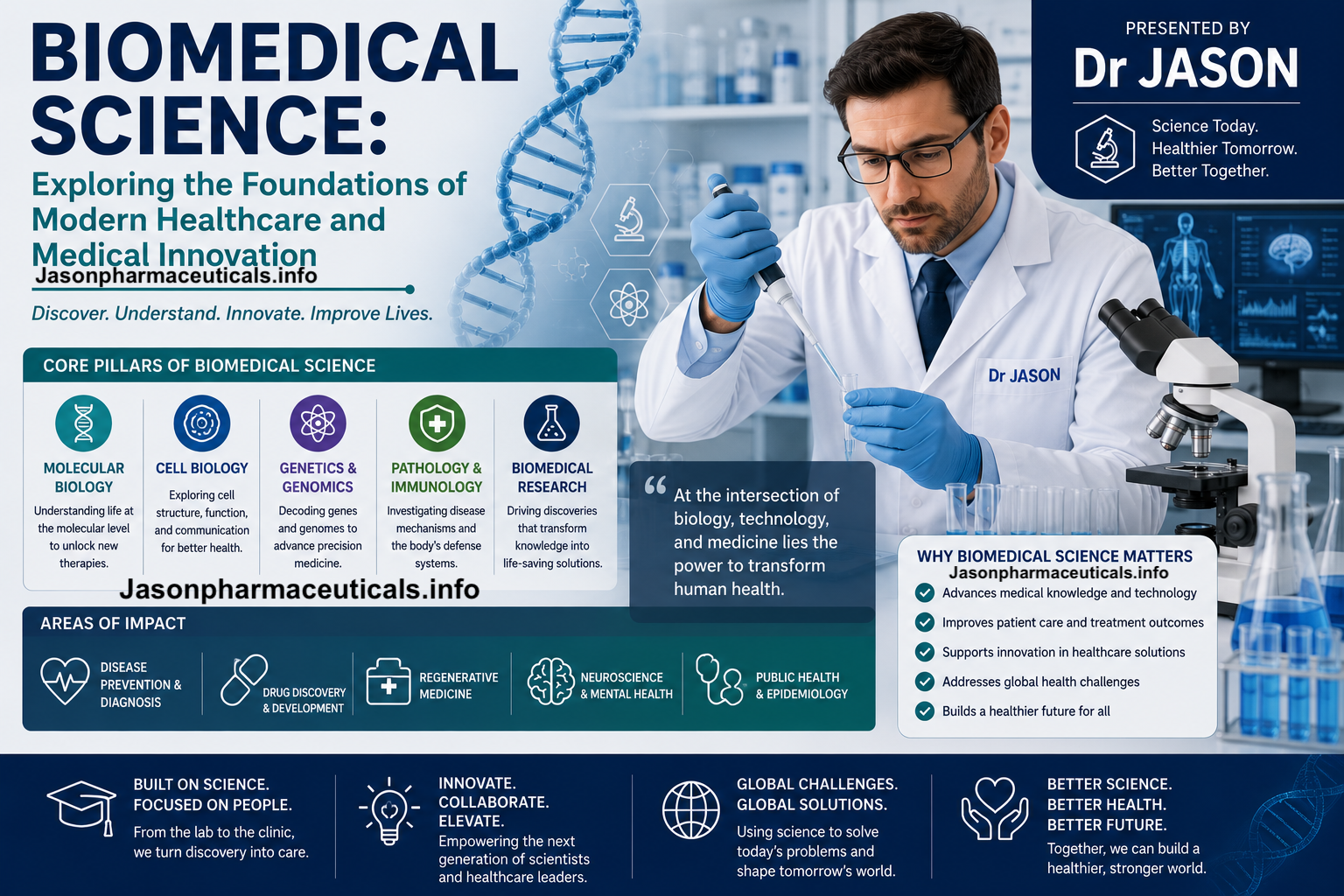
Presented by Dr. JASON
Biomedical science is a rapidly advancing field that combines biology, medicine, chemistry, genetics, and technology to understand human health, disease processes, and the development of innovative healthcare solutions. Through laboratory research, scientific investigation, and advanced analytical techniques, biomedical science helps researchers uncover the mechanisms behind diseases and supports the development of improved diagnostics, therapies, and preventive strategies.
At Jason Research Chemicals, Dr. JASON is committed to providing educational resources that explore biomedical science, pharmaceutical research, laboratory techniques, analytical chemistry, and scientific discoveries shaping the future of healthcare.
What Is Biomedical Science?
Biomedical science is the study of biological processes related to human health and disease. It focuses on understanding how cells, tissues, organs, genes, and biological systems function and how changes in these systems can contribute to medical conditions.
This multidisciplinary field connects fundamental scientific research with practical healthcare applications by investigating:
- Disease mechanisms
- Human biology
- Molecular processes
- Diagnostic technologies
- Therapeutic development
- Medical research innovations
Biomedical scientists work across laboratories, universities, healthcare institutions, biotechnology organizations, and research centers to expand knowledge and improve health outcomes.
The Importance of Biomedical Science
Biomedical science plays a critical role in advancing healthcare by helping researchers:
Understand Disease Processes
Scientists study the molecular and cellular causes of diseases to better understand how conditions develop and progress.
Develop Diagnostic Technologies
Biomedical research supports the creation of improved laboratory tests and diagnostic methods that help identify diseases earlier and more accurately.
Support Drug Discovery
Biomedical science provides essential knowledge about biological targets, disease pathways, and therapeutic strategies that contribute to pharmaceutical research.
Improve Healthcare Innovation
Research in biomedical science contributes to advances in personalized medicine, biotechnology, regenerative medicine, and medical technology.
Major Fields Within Biomedical Science
Biomedical Science: Exploring the Foundations of Modern Healthcare and Medical InnovationMolecular Biology
Molecular biology examines biological molecules such as DNA, RNA, and proteins to understand how genetic information controls cellular functions.
Researchers use molecular biology techniques to investigate disease pathways, genetic changes, and biological interactions.
Genetics and Genomics
Genetics and genomics explore how inherited information influences health and disease. Advances in genomic research have contributed to:
- Disease risk assessment
- Personalized healthcare approaches
- Genetic research
- Precision medicine development
Immunology
Immunology focuses on the immune system and how it protects the body from disease. Researchers study immune responses, inflammation, vaccines, and immune-related conditions.
Microbiology
Microbiology investigates microorganisms, including bacteria, viruses, fungi, and other microbes. This research supports understanding infectious diseases and developing strategies for prevention and treatment.
Biochemistry
Biochemistry studies the chemical processes that occur within living organisms. It provides important insights into metabolism, cellular communication, and biological functions.
Biomedical Laboratory Research
Laboratory research is a fundamental component of biomedical science. Scientists use advanced methods and technologies to analyze biological samples, investigate disease mechanisms, and generate scientific evidence.
Common biomedical laboratory techniques include:
- Microscopy
- Cell culture
- Polymerase Chain Reaction (PCR)
- DNA sequencing
- Protein analysis
- Immunoassays
- Chromatography
- Spectroscopy
- Bioinformatics analysis
These techniques allow researchers to study complex biological systems and develop new scientific understanding.
Biomedical Science and Pharmaceutical Research
Biomedical science provides the foundation for many pharmaceutical discoveries. By understanding biological pathways and disease mechanisms, researchers can identify potential targets for future medical innovation.
The relationship between biomedical science and pharmaceutical research includes:
- Identifying disease-related pathways
- Studying biological responses
- Evaluating therapeutic approaches
- Supporting clinical research
- Improving understanding of medicine development
Emerging Technologies in Biomedical Science
Modern biomedical research continues to advance through innovative technologies, including:
Artificial Intelligence
AI tools help researchers analyze complex biological data, identify patterns, and support scientific discovery.
Biotechnology
Biotechnology enables advances in molecular research, genetic studies, and innovative healthcare applications.
Bioinformatics
Bioinformatics combines biology and computer science to analyze large-scale biological datasets.
Precision Medicine
Precision medicine uses biological information to support more individualized approaches to healthcare research.
Regenerative Medicine
Researchers explore approaches involving cells, tissues, and biological materials to better understand repair and restoration processes.
Quality and Ethics in Biomedical Research
Scientific integrity is essential in biomedical science. Researchers follow established principles involving:
- Accurate data collection
- Reproducible methods
- Ethical research practices
- Laboratory safety
- Quality management systems
- Responsible scientific communication
These standards help ensure that biomedical discoveries are reliable and contribute positively to healthcare.
Career Opportunities in Biomedical Science
Biomedical science offers diverse career pathways, including:
- Biomedical Scientist
- Laboratory Research Scientist
- Molecular Biologist
- Biotechnology Researcher
- Clinical Research Specialist
- Immunology Researcher
- Genetic Researcher
- Pharmaceutical Scientist
- Analytical Scientist
- Academic Researcher
Professionals in these fields contribute to scientific discovery, healthcare advancement, and medical innovation.
The Future of Biomedical Science
The future of biomedical science is being shaped by rapid advances in biotechnology, artificial intelligence, genomics, and laboratory technology. As researchers gain deeper insights into human biology, biomedical science will continue to support new approaches to understanding disease, improving diagnostics, and advancing healthcare research.
Collaboration between scientists, healthcare professionals, engineers, and technology experts will remain essential for solving complex medical challenges and creating innovative solutions.
Conclusion
Biomedical science is a cornerstone of modern healthcare research, connecting biological discoveries with medical innovation. Through laboratory investigation, advanced technologies, and interdisciplinary collaboration, biomedical scientists continue to expand our understanding of health and disease.
Presented by Dr. JASON, Jason Research Team is dedicated to sharing educational resources on biomedical science, pharmaceutical research, laboratory techniques, analytical methods, and scientific innovation. Our mission is to support scientific education and encourage a deeper understanding of the research that drives progress in healthcare.
Biomedical Science, Biomedical Research, Laboratory Research, Molecular Biology, Biotechnology, Pharmaceutical Science, Pharmaceutical Chemistry, Medical Research, Genetics, Immunology, Biochemistry, Analytical Science, Drug Discovery, Healthcare Innovation, Scientific Education, Jason Research Chemicals, Dr. JASON.
Leave a Reply