

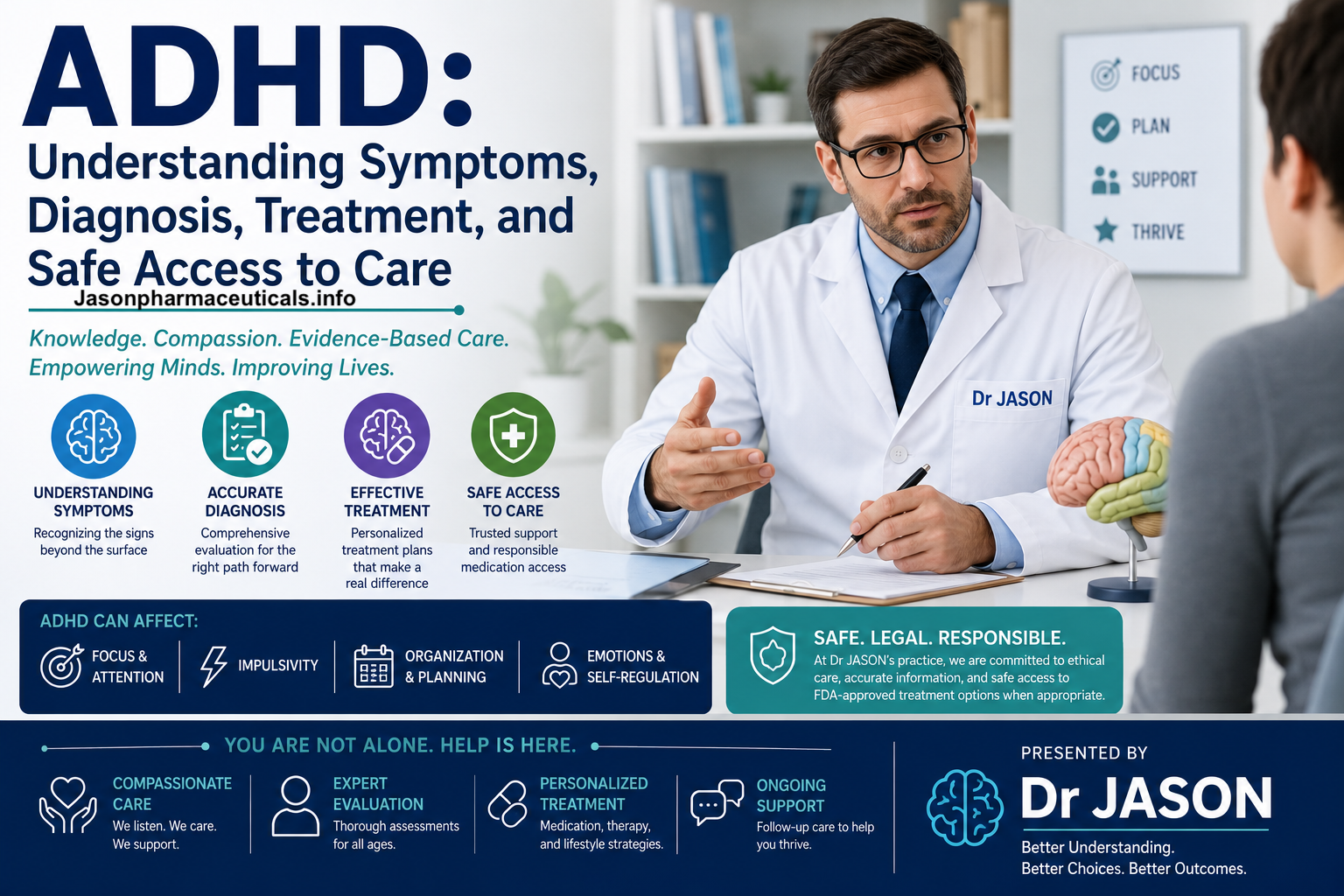
Presented by Dr. JASON
Living with Attention-Deficit/Hyperactivity Disorder (ADHD) presents unique challenges, but it also comes with strengths that many individuals learn to recognize and develop over time. With the right combination of medical care, behavioral strategies, supportive environments, and healthy daily habits, people with ADHD can thrive at school, work, and in their personal lives.
Dr. JASON is dedicated to providing educational resources on neuroscience, clinical pharmacology, pharmaceutical science, and evidence-based healthcare. This article explores what it means to live with ADHD, effective management strategies, available treatments, and the importance of obtaining prescription medications through qualified healthcare professionals.
Understanding ADHD
ADHD is a neurodevelopmental condition that affects attention, executive functioning, impulse control, and activity levels. It can occur in children, adolescents, and adults, with symptoms varying from person to person.
Many individuals experience challenges with:
- Maintaining attention
- Staying organized
- Managing time effectively
- Completing tasks
- Regulating emotions
- Controlling impulsive behaviors
Although ADHD presents daily challenges, many people also develop creativity, adaptability, problem-solving abilities, and resilience.
Daily Challenges
Living with ADHD may affect several aspects of everyday life.
School and Education
Students may experience difficulty with:
- Completing assignments
- Maintaining focus during lessons
- Organizing school materials
- Meeting deadlines
- Preparing for examinations
Educational accommodations and structured support can help improve academic success.
Work and Career
Adults with ADHD may face challenges involving:
- Project organization
- Time management
- Prioritizing responsibilities
- Meeting deadlines
- Maintaining concentration during lengthy tasks
Many individuals benefit from organizational tools, reminders, calendars, and workplace accommodations where available.
Relationships
ADHD can influence communication and daily routines, but healthy relationships can be strengthened through:
- Open communication
- Mutual understanding
- Consistent routines
- Shared planning strategies
- Professional counseling when appropriate
Effective ADHD Management
Successful ADHD management often combines several evidence-based approaches.
Behavioral Therapy
Behavioral therapy helps individuals develop practical skills for:
- Organization
- Planning
- Time management
- Emotional regulation
- Goal setting
- Problem-solving
Cognitive Behavioral Therapy (CBT)
CBT may help adolescents and adults identify unhelpful thinking patterns and develop practical coping strategies for everyday challenges.
Medication
For some individuals, prescription medication may be recommended as part of a comprehensive treatment plan. Decisions about medication should be made in consultation with a licensed healthcare professional, who can evaluate individual needs, discuss potential benefits and risks, and provide ongoing monitoring.
Healthy Lifestyle Habits
Lifestyle strategies may complement medical treatment, including:
- Maintaining regular sleep schedules
- Engaging in consistent physical activity
- Eating a balanced diet
- Breaking large tasks into smaller steps
- Using planners, reminders, and digital calendars
- Reducing unnecessary distractions during focused work
These habits can support overall well-being and improve daily functioning.
Building a Support Network
Support from family members, teachers, employers, friends, and healthcare professionals can play an important role in managing ADHD. Support groups and educational resources may also help individuals and caregivers better understand the condition and share practical coping strategies.
Safe Access to ADHD Care
If medication is recommended, it should be prescribed by a licensed healthcare professional and obtained from a licensed pharmacy operating in accordance with applicable laws and regulations. Avoid websites that offer prescription ADHD medications without a valid prescription or appropriate medical evaluation, as products from these sources may be counterfeit, contaminated, or otherwise unsafe.
Regular follow-up appointments allow healthcare professionals to monitor progress, address side effects, and adjust treatment plans when necessary.
Advances in ADHD Research
Scientists continue to investigate:
- Brain development
- Genetics
- Pharmacogenomics
- Personalized medicine
- Digital therapeutics
- Artificial intelligence in healthcare
- Long-term treatment outcomes
- Novel therapeutic approaches
These advances continue to improve understanding of ADHD and contribute to more individualized care.
Looking Ahead
Living with ADHD involves understanding personal strengths, recognizing challenges, and developing practical strategies that support long-term success. With early diagnosis, evidence-based treatment, and ongoing support, many individuals achieve their educational, professional, and personal goals.
Conclusion
ADHD is a lifelong condition for many people, but it does not define an individual’s potential. Through comprehensive care, behavioral strategies, healthy habits, and collaboration with qualified healthcare professionals, individuals with ADHD can successfully manage symptoms and lead productive, meaningful lives.
Presented by Dr. JASON, Jason Research Chemicals is committed to providing educational information on neuroscience, clinical pharmacology, pharmaceutical science, laboratory research, and biomedical innovation. Our mission is to promote scientific understanding through accurate, evidence-based healthcare education.
Living With ADHD, ADHD Management, ADHD Support, Adult ADHD, Childhood ADHD, ADHD Treatment, Behavioral Therapy, Cognitive Behavioral Therapy, ADHD Lifestyle, Neuroscience, Clinical Pharmacology, Pharmaceutical Science, Mental Health Education, Medical Research, Living With ADHD, Dr. JASON, Jason Research Chemicals.
Leave a Reply